
The best fabric for an evening or wedding guest dress
Crepe, satin, taffeta or duchess satin? It all starts with the silhouette: a dress that flows or a dress that holds its shape. Our dressy fabrics sorted by drape, for day and for evening.
Nathalie
Fabric Expert
6 min read
For a dress that flows, a silk crepe or a satin; for a dress that holds its shape, a taffeta or a duchess satin. The choice starts with the silhouette, not the weight, because two silks of almost the same weight can behave in opposite ways. Then come the time of day and the season.
It is the first question to ask yourself in front of the pattern, before the colour even. Should the dress follow the body or stand away from it? A bias-cut maxi dress, a wrap dress, a skirt that moves with every step all need a fabric that falls. A bustier, a full circle skirt, a crisp little cocktail dress need a fabric that keeps whatever shape you give it.
Weight doesn’t tell you everything
Our product pages give the weight of every fabric, and once converted to g/m², it holds some surprises. Our plain 100% silk taffeta weighs about 64 g/m², our fluid silk crepe 69. Give or take five grams, the same weight. Put them on a dress form: the taffeta stands away and keeps its folds, the crepe falls straight. Further along the shelves, silk duchess satin weighs 161 g/m² and silk satin-backed crepe close to 180, and once again it is the heavier one that flows.
What decides it is the weave. Crepe yarns are tightly twisted, and that twist makes the fabric supple and gives it its drape. Taffeta and duchess satin are densely woven, and that density gives them their body. Here are our dressy fabrics, from lightest to heaviest.
| Fabric | ≈ g/m² | It… | For |
|---|---|---|---|
| Silk chiffon | 19–24 | floats, sheer | sleeves, stoles, layered skirts |
| Silk georgette crepe | 43–80 | flows, matte and slightly grainy | layered maxi dress, sleeves |
| Silk taffeta | 59–79 | holds its shape, rustles | full skirt, cocktail dress |
| Fluid silk crepe | 69 | flows, matte | maxi dress, wrap dress, bias cut |
| Silk satin | 75–95 | flows and shines | bias-cut slip dress, fluid skirt |
| Duchess satin (silk or acetate) | 161–243 | holds its shape, shines | bustier, circle skirt, structured dress |
| Satin-back cady crepe | 161–299 | falls straight, without floating | sheath dress, shift dress |
| Silk satin-backed crepe | 171–179 | flows, heavy | maxi dress that follows the body |
A dress that flows: crepe, satin, georgette
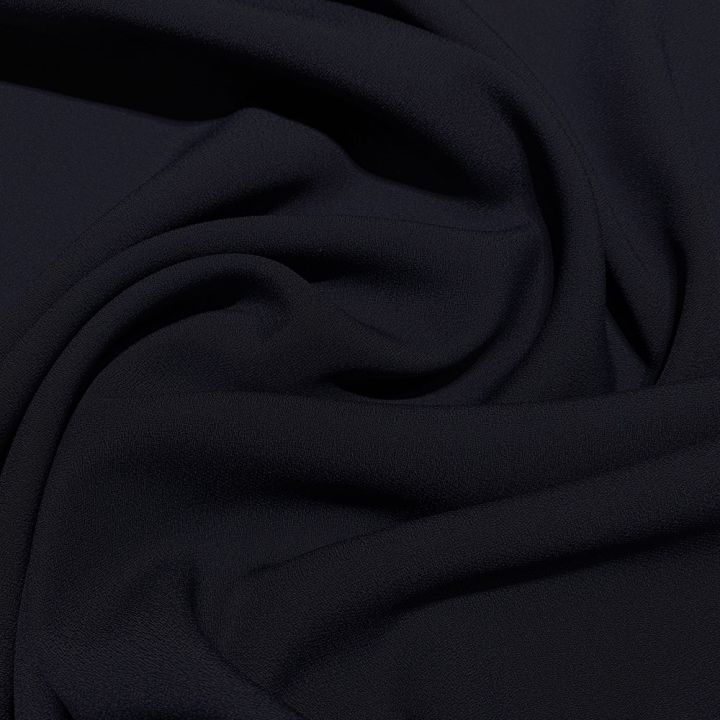
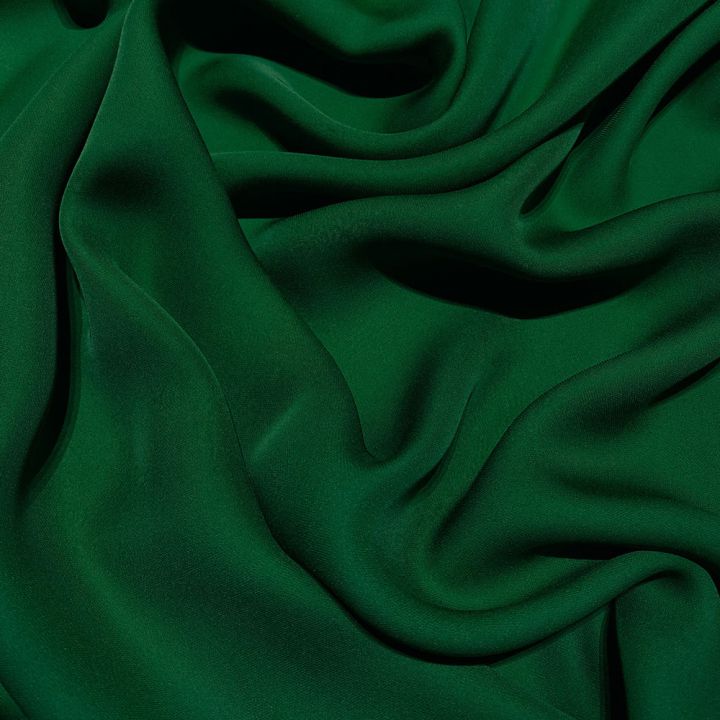
For a first maxi dress, we recommend silk crepe over satin. It is matte, doesn’t draw attention to every seam, slips less under the presser foot and barely creases. Fluid crepe (69 g/m²) makes a dress that floats and moves with you; in pale shades it lets what is underneath show through, so plan a lining. Silk satin-backed crepe, two and a half times heavier, follows the body without clinging, and its shiny reverse can be used for a belt or a bias binding.
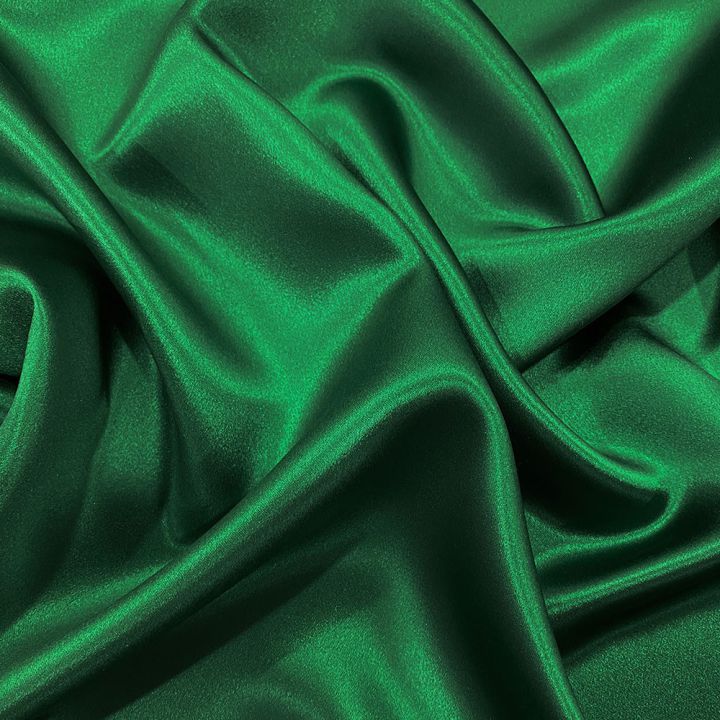
Silk satin, cut on the bias, gives you the 1930s evening dress, the one that glides over the hips. It is also a fabric that forgives nothing. It shows the body, the best and the rest, and keeps the mark of a misplaced pin. It slips at the cutting table as much as at the machine. Save it for a second dress, or for a bias-cut skirt, which is easier to get right.
Chiffon and georgette, finally, are fabrics for layers and sleeves. Georgette, grainier and a little less sheer, slips less than chiffon and is easier to cut. Both need a lining or a slip underneath, and they are what lets the light through a summer wedding guest dress.
Nathalie’s tip: a bias-cut dress stretches under its own weight, and not evenly. Make it up completely except for the hem, then leave it on a hanger for twenty-four hours, forty-eight for a heavy fabric. Level the hem afterwards, wearing the shoes you will wear on the night.
A dress that holds its shape: taffeta, duchess, cady
Light but crisp, taffeta never quite falls. Crumple a corner in your hand and it rustles like tissue paper. It gives volume without weight, which makes it the fabric of puffball skirts and short cocktail dresses. It is one of the silks that rustle, what the French call froufrou. Its faults come with its qualities. It keeps the marks of pins and needles (pin inside the seam allowances), and a badly pressed crease is hard to get out.
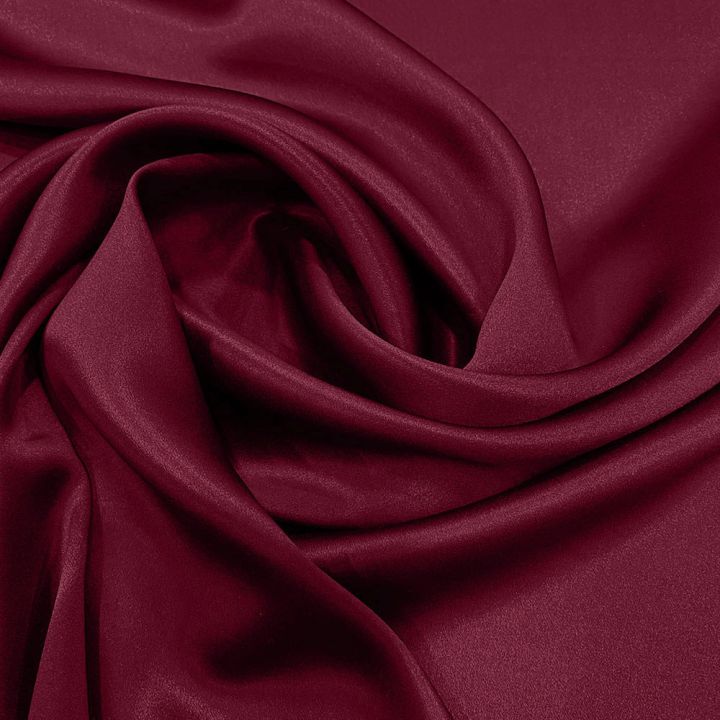
Duchess satin is the fabric of bustiers, circle skirts and ball gowns. Heavy, dense and lustrous, it holds the fullness of a circle skirt on its own and marks every fold crisply. We have it in silk and in acetate; some are double-faced, one colour on each side, enough for a skirt whose reverse shows as it moves. A long duchess skirt is no lightweight, worth remembering if the evening runs late.
In between, satin-back cady crepe makes sheath dresses and shift dresses. It falls straight without floating, hides small sewing flaws and comes in a wide choice of colours. For a sober daytime wedding guest dress, it is often where we start.
Day or evening?
The time of day changes the fabric almost as much as the silhouette. For a daytime ceremony, at the town hall, in church or at a wedding lunch, matte or softly lustrous fabrics and light colours are the safest: crepe, georgette, taffeta. Sequins and very shiny fabrics wait for the evening, and white and ivory are left to the bride.
In the evening, shine has its place. Satin, duchess satin, lamé, or a sequined tulle worn as a skirt over a crepe base. In winter, think of velvet; we compared silk velvet and cotton velvet to help you choose. Satin-backed crepe and duchess satin, being heavier, work in winter too. In summer, chiffon and fluid crepe let the air through.
What else to plan for
A lining, almost always. It hides the sheerness of pale crepes, georgette and chiffon, helps the dress glide over tights, and makes a taffeta or duchess dress softer to wear. To choose one, we compared cupro and acetate.
For the yardage, start from your pattern, which gives it by fabric width. Most of these fabrics are 135 to 140 cm wide, some duchess satins up to 155. A bias-cut dress needs noticeably more fabric than the same dress cut on the straight grain.
What if the dress has to travel?
Choose a crepe. It comes out of a suitcase best. Taffeta and duchess satin keep the creases of the journey; roll them in tissue paper rather than folding them, and hang the dress as soon as you arrive.
One last step before you order. An evening dress is worn under lamps, not in sunlight, and a colour does not react the same way to both. Lay a sample under the light of a living room, once evening has come: that is the light you will be seen in.
Happy sewing,
Nathalie
Shop the fabrics
Fabrics in this article
Related articles
You might also like

What is tweed fabric, and how do you sew it?
Tweed means two fabrics: Scottish wool cloth and the fancy tweed of the Chanel jacket. What our tweeds really contain, and how to sew them without relying on the iron.

Silk velvet vs cotton velvet: which one to choose?
Same price per metre, two fabrics with almost nothing in common. What silk velvet is really made of, what gives cotton velvet its body, and how to sew each one.

Satin vs silk: what’s the difference?
Satin is a weave, silk is a fibre. Six satins from our shelves compared, from polyester to silk, and the reliable ways to tell whether a satin is really silk.